Distance, Transportation and Time#
Act 0: Acknowledgments#
- This text is not about Game Design. But this text is also about Game Design.
- Act 2 will be about transportation, and I chose to discuss the subject using buses as an example. This means that other modes of transportation are different, but the core of the topic remains the same.
Act 1: Distance#
When we talk about level design, one of the problems that haunts us is how to handle long distances. The player needs to cross a field between the village and the castle, or between one dungeon and another, or even across an empty field from left to right, but how do we make this path not tedious?
Let’s say it takes the player around 5 minutes to get from point A to point B, in this example, the mission is to deliver a letter to an important character in the story. As expected, having the player walk in one direction for 5 minutes will cause extreme boredom.
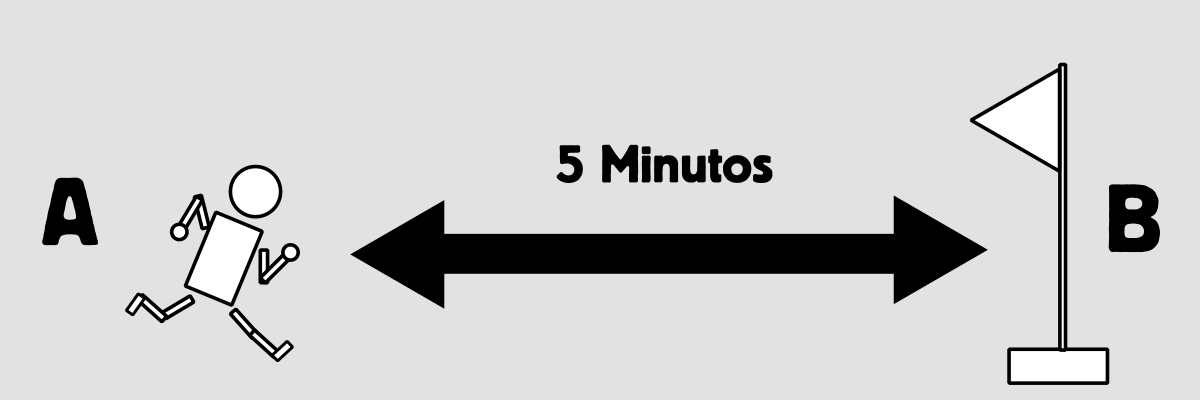
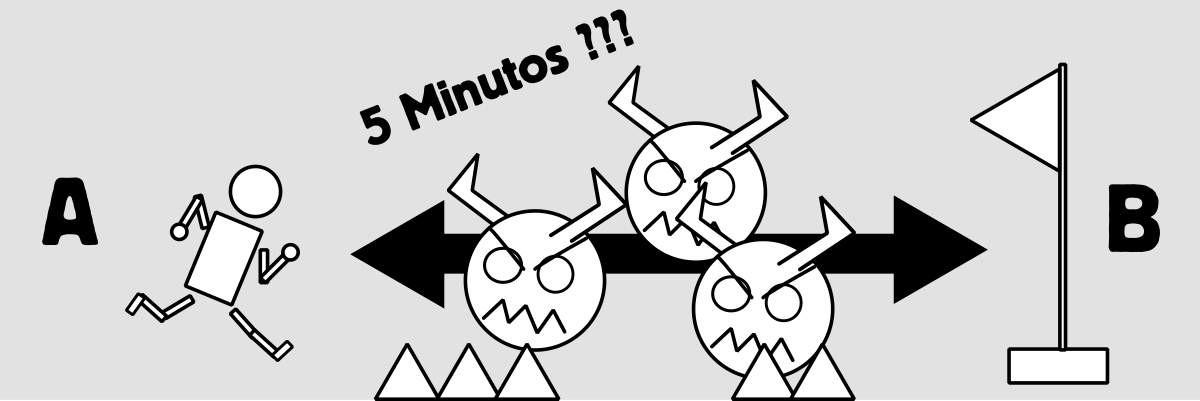
What we’ll do to solve this is to create the illusion that those 5 minutes seem like much less time than they actually are, usually by creating small activities for the player to engage in between point A and point B.
Some examples of activities include: Adding some enemies to fight from time to time, placing vertical obstacles that require him to jump and climb, creating visual events in the environment that attract his attention through aesthetics and beauty, among other examples.
By doing this, the player can walk for many, many minutes longer than expected without causing boredom (which is fatal to any game). By adding these small activities, the time between points A and B will be longer, so if desired, the level designer can decrease the distance between the starting point and the objective.
This makes time relative and gives the sensation of time passing faster.
I know I’m talking about game development, but in real life, many people apply this concept in their daily routines.
Act 2: Transportation#
A worker typically goes through the cycle of waking up early, taking a bus to their workplace, working for 8 hours, taking another bus to their place of study and/or home, sleeping, and repeating.
Let’s define some of these steps so that the conclusion can be reached clearly.
What does “working for 8 hours” mean? It means that a person working for a company sells their time and effort to create value for someone or something. Simply put, you create wealth for that company in some way, and that company pays you to do it. Of course, it only pays a portion of it, the majority of the value produced goes to the company.
What does “Taking a bus to work” mean? Typically, a dense city or metropolis has its most expensive and wealthy part in the center, while the outskirts and poorer areas are located on the city’s edges.
Typically, workers cannot live in locations that is easy to go from their homes (far away from the center of the city) to their workplace (in the center of the city). This results in workers spending 1 to 3 hours on public transport to get to work and the same amount of time returning home.
It takes a long time to spend on public transport, we all agree on that, right? Workers can’t spend all that time just going from point A to point B doing nothing. So, because of that, many get distracted along the way.
Those who go to work by bus, usually, listen to podcasts or read a book. The radio is a biker’s or bus driver’s best friend. Music, movies, and series provide comfort for young people and teenagers who have to make this kind of trip every day. And if even that’s not available, a conversation can help alleviate the boredom.
What would otherwise drive anyone crazy can now, with some distraction, extend that time and reduce suffering.
But that’s not all…
Act 3: Time#
Remember when I mentioned “Working for 8 hours”? Well, let’s get back to that.
When you work for a company, it offers a salary based on your working hours. If you work 8 hours at the company, it will only count those 8 hours.
However, as a worker, you have to sacrifice more than that. Besides the 8 hours of work, there’s the distance and time wasted to go and to return from work. My question for you is: Does your salary include this time by transportation in your salary?
No, of course not.
Something well-planned so that the worker lives far away from the workplace, and loses that unpaid time on public transport, time that could be spent doing other things, talking to loved ones, studying, living.
And workers need to create distractions to avoid going crazy with boredom and anxiety, and that time doesn’t come back. That’s why the workers is fighting for time, for more time and quality of work, it’s not a single point struggle. That’s why ending the 6x1 work week is so important, that’s why union formation is so important, that’s why better wages are so important, that’s why decent housing is important, and so on.
We need more time. Remember: Your boss lives down the street from the company, and you live on the other side of the bridge.
